
What This Means for Parents and Educators
By Zachary James, M.S.Ed., M.Ed. (Educational Leadership) Founder & Director, Adaptive Learning Academy
Mr. James and Adaptive Learning Academy were featured in the Teacher Treasury this week. This article and the featured article are based on The Regulation-First Learning Framework™, a core model within The Adaptive Learning Pedagogy Framework™ developed by Adaptive Learning Academy.
A Regulation-First Perspective
At Adaptive Learning Academy, we view shutdown, avoidance, and inconsistency through the lens of the Regulation-First Learning Framework™. Learning does not begin with instruction—it begins with access. When regulation, executive function, and emotional safety are not in place, academic tasks can quickly become overwhelming. We often talk about the difference between a learning problem and an access problem.
Many children understand the material. They know the answer. They have done the task before.
But when it is time to start, something shifts.
They stare at the paper.
They shut down.
They avoid.
They escalate.
They refuse.
To adults, it can look like laziness, defiance, or lack of motivation, but often, that is not what is happening at all.
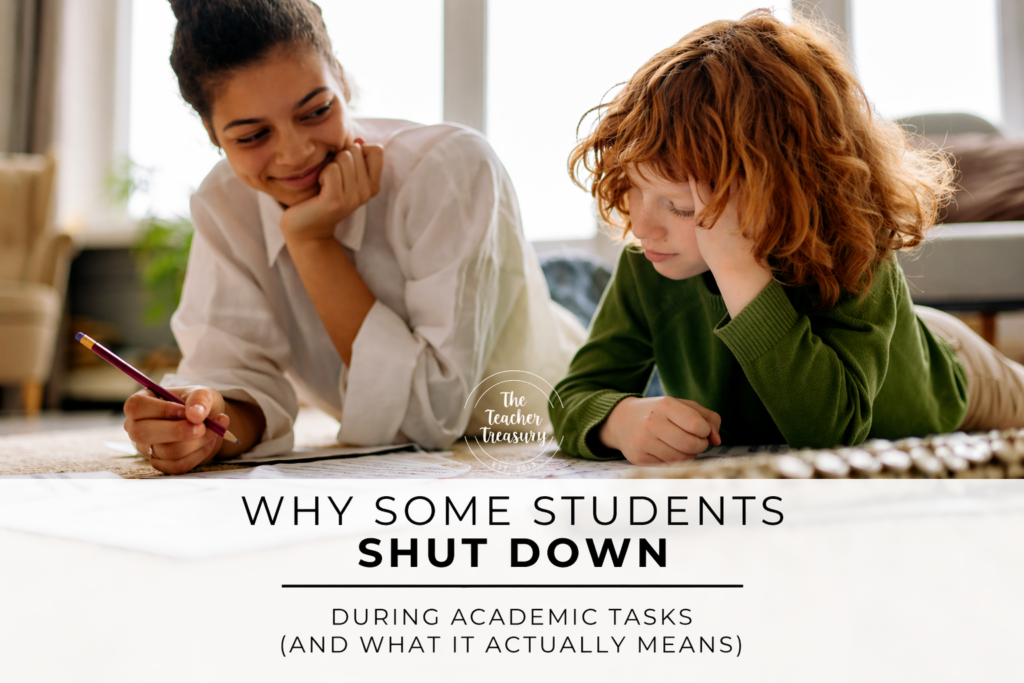
We were recently featured by Teacher Treasury in an article exploring why some students shut down during academic tasks and what those moments may actually mean underneath the surface.
The article looks at how nervous system overload, executive function fatigue, trauma history, overwhelm, and regulation challenges can all impact a child’s ability to access learning in the moment.
One of the biggest misconceptions in education is assuming that if a child can do something sometimes, they should be able to do it all the time.For many neurodivergent and trauma-impacted learners, access changes from day to day—and sometimes from moment to moment.
Signs a Child May Be Struggling With Access to Learning
A child may know how to complete the task and still be unable to begin. That is why we believe it is so important to stop asking:
“Why won’t they do it?”
And instead begin asking:
“What is making this hard right now?”
This shift changes everything.
If your child or student:
- struggles to start work
- shuts down during schoolwork
- becomes overwhelmed by simple tasks
- has inconsistent performance
- escalates during homework or learning
then this article may help you better understand what is happening.
Read the Full Teacher Treasury Article on Student Shutdown and Task initiation
Learn more about nervous system overload, executive function fatigue, task initiation struggles, and why students may shut down during schoolwork.
Continued Support
If this topic resonates with you, these resources may also help:
- The Adaptive Learning Pedagogy Framework
- Is This a Learning Problem or a Regulation Problem?
- Executive Function and Learning: What Parents Need to Know
- Signs Your Child May Be Dysregulated During Learning
About the Author
Zachary James, M.S.Ed., M.Ed. (Educational Leadership) is the Founder and Director of Adaptive Learning Academy. He holds two master’s degrees in education and has served as an educator, instructional coach, and school administrator. His work focuses on regulation-first pedagogy, executive function development, and trauma-informed educational systems designed to support neurodivergent and complex learners.
The Adaptive Learning Pedagogy Framework™ and Regulation-First Learning Framework™ were developed by Zachary James and Adaptive Learning Academy.