A regulation-first educational model for neurodivergent, Trauma-Impacted & complex learners.
A Note For Parents
Many parents notice a confusing pattern in their child’s learning. Their child may understand concepts during conversation, ask thoughtful questions, and show curiosity about new ideas. Yet when schoolwork begins, focus disappears, frustration rises quickly, and assignments suddenly feel overwhelming. For many neurodivergent learners, this isn’t a question of intelligence or motivation. Often, it is a question of nervous system regulation.
When the brain becomes overwhelmed by stress, sensory input, or cognitive load, systems responsible for attention, executive function, and working memory become harder to access. In these moments, learning can feel impossible — even when a child clearly understands the material. Understanding the difference between a learning challenge and a regulation challenge can change how families approach schoolwork and daily routines.
To help parents and educators explore this idea, Adaptive Learning Academy created a free guide called “Is This a Learning Problem or a Regulation Problem?” which walks through common signs of dysregulation and practical ways to support learning through regulation.
The Adaptive Pedagogy Framework™
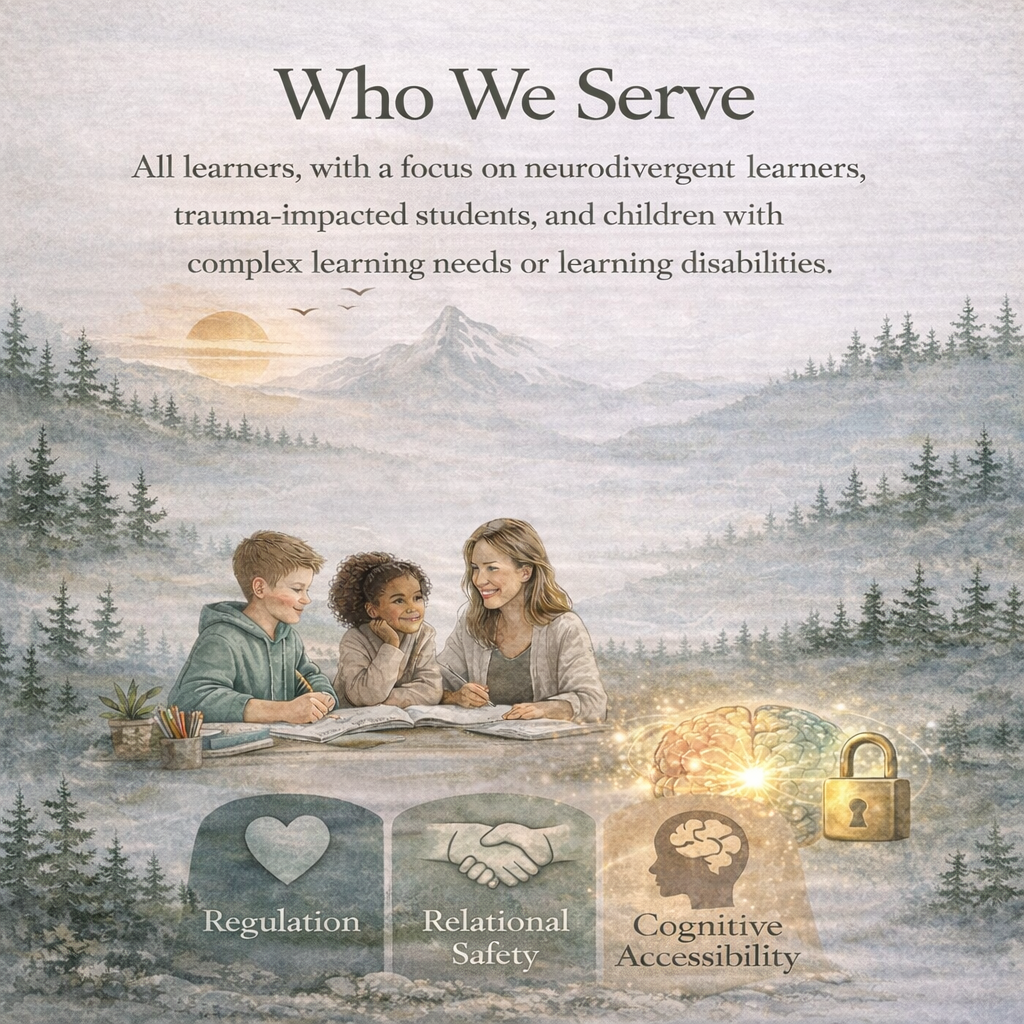
The Adaptive Pedagogy Framework™ is the core educational model developed by Adaptive Learning Academy to support neurodivergent learners, trauma-impacted students, and children with complex learning needs.
Traditional academic systems often assume that learning begins with instruction, curriculum, or academic expectations. However, modern neuroscience increasingly demonstrates that learning depends on the brain’s ability to access cognitive systems such as attention, working memory, executive function, and reasoning.
When the nervous system becomes overwhelmed, these cognitive systems become significantly harder to access.
The Adaptive Pedagogy Framework™ recognizes this neurological reality and organizes learning environments around the conditions that allow the brain to access learning systems.
Within this model, regulation, relational safety, and cognitive accessibility are treated as foundational to learning rather than secondary supports.
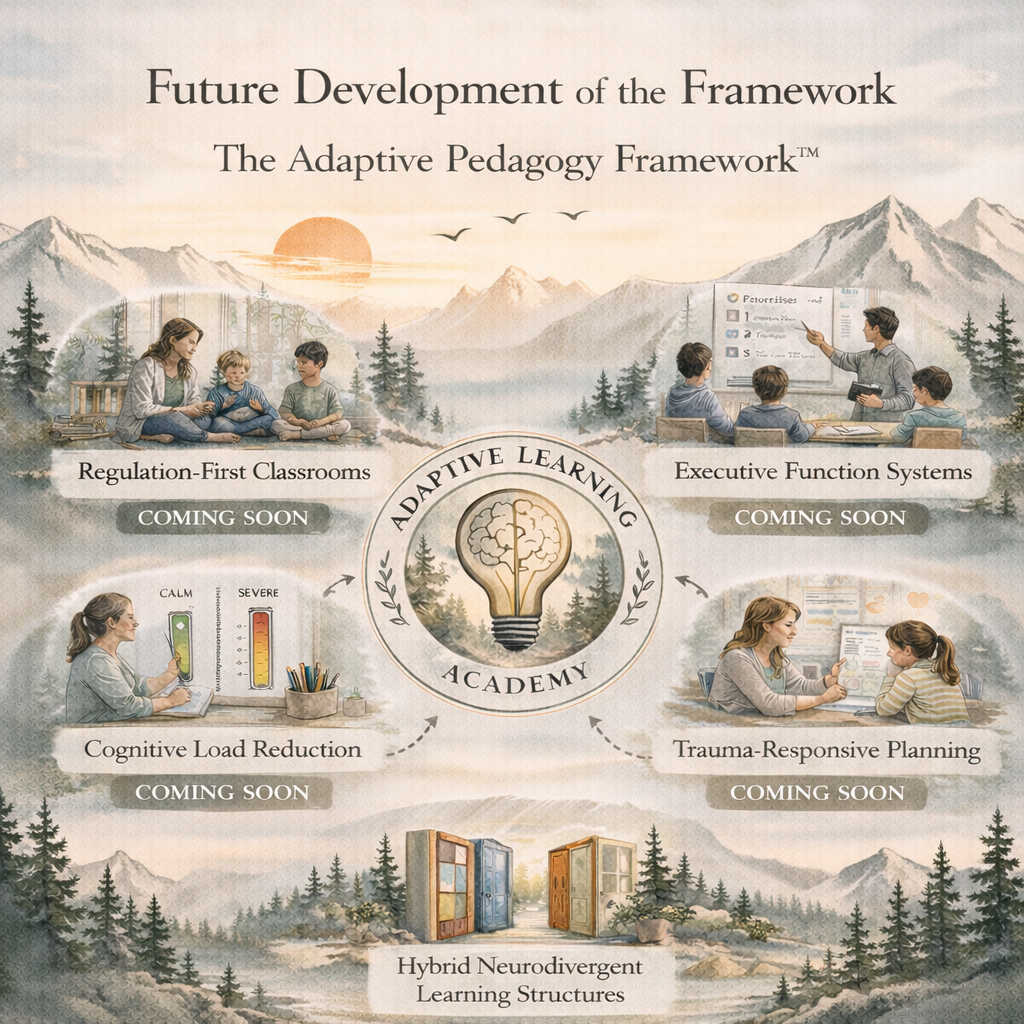
This framework forms the foundation for the educational resources, planning systems, and learning strategies developed by Adaptive Learning Academy.
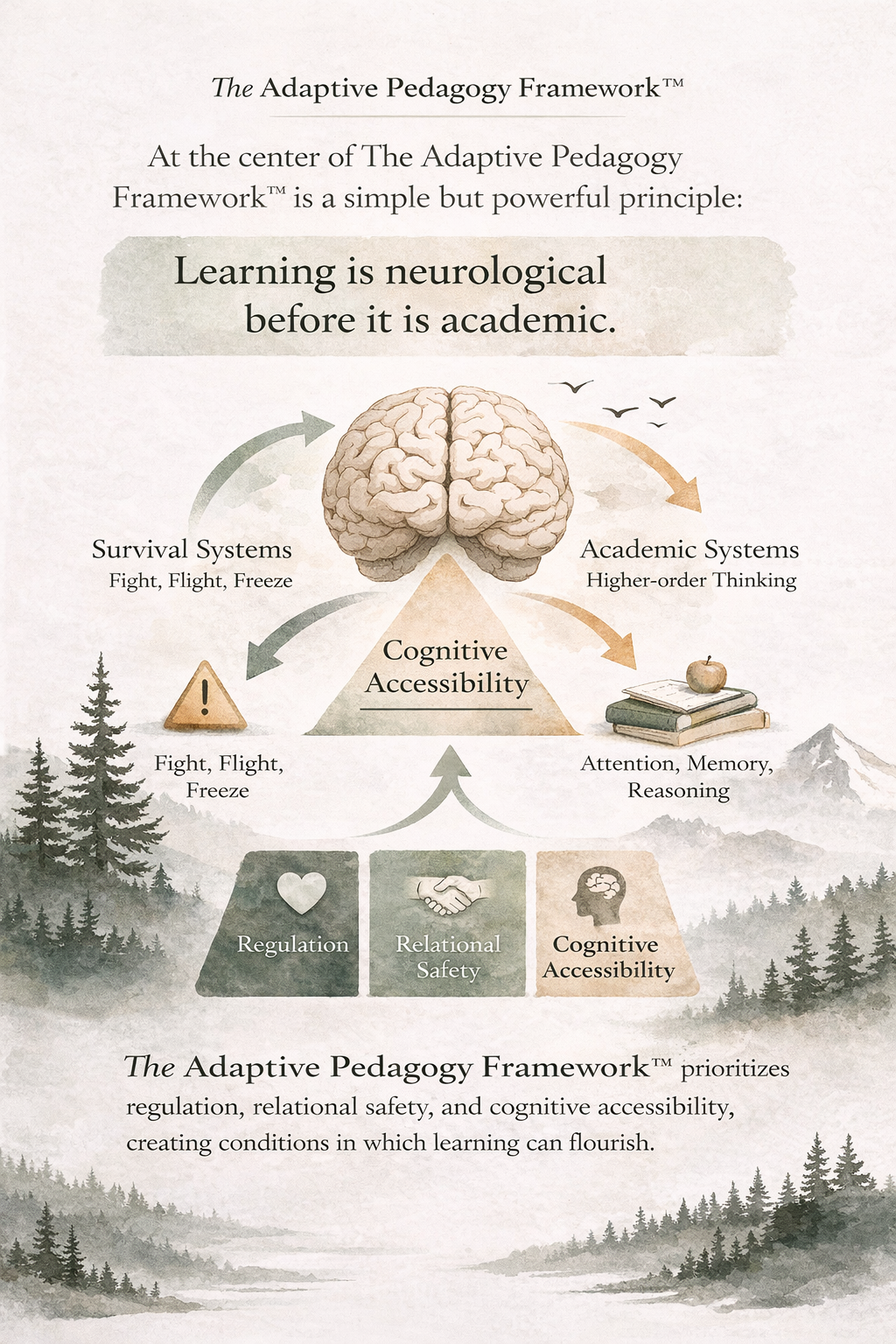
At the center of this framework is a simple but powerful principle:
Learning is neurological before it is academic.
The brain must be able to access systems responsible for attention, working memory, reasoning, and executive function before academic instruction can be effective.
When a child’s nervous system enters a state of stress, overload, or emotional threat, the brain naturally shifts resources toward survival systemssuch as fight, flight, freeze, or shutdown.
In these states, the brain temporarily reduces activity in the prefrontal cortex — the region responsible for higher-order thinking, planning, impulse control, and problem solving.
In practical terms, this means that a child who appears capable of learning may suddenly struggle to begin tasks, sustain focus, process instructions, or regulate frustration.
This framework organizes learning environments around restoring access to these cognitive systems.
Rather than beginning with academic pressure, the framework prioritizes regulation, relational safety, and cognitive accessibility, creating conditions in which learning becomes possible again.
The Regulation-First Learning Framework™ is the core instructional model within the Adaptive Pedagogy Framework™.
This model recognizes that learning typically follows a predictable neurological sequence. This model also assumes that the child is from a typical upbringing and physical and emotional safety are present; in other words, significant familial or developmental trauma are not present.
For many neurodivergent learners, academic engagement tends to emerge through the following progression:
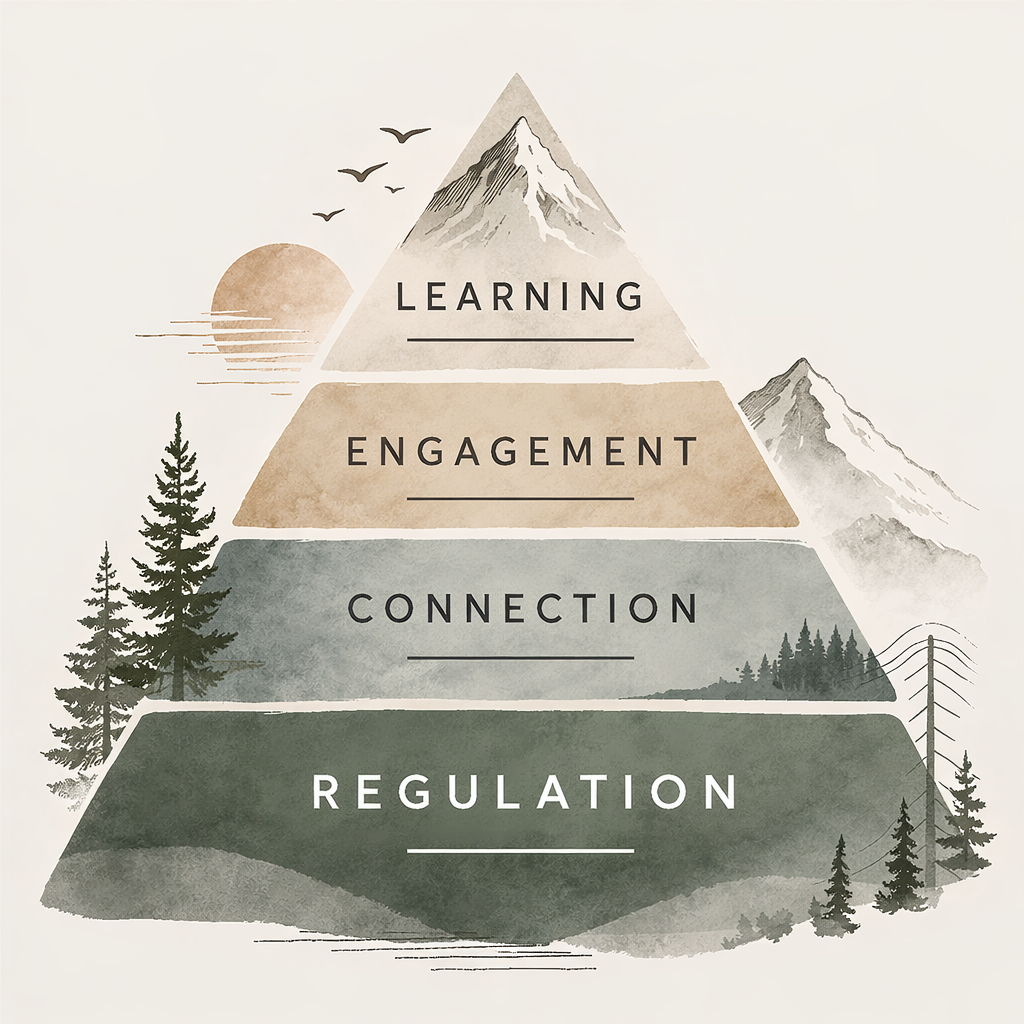
Regulation → Connection → Engagement → Learning
Regulation Learning begins with nervous system stability. When the nervous system is calm and regulated, the brain can access cognitive systems responsible for attention, reasoning, and executive function.
Connection Supportive adult presence helps the brain interpret the environment as safe and predictable. Relational safety can reduce stress responses and increase learning readiness.
Engagement Simplification and reducing cognitive load allows the brain to gradually re-engage with learning tasks. Simplified instructions, shorter assignments, and structured supports help prevent overwhelm.
Learning Once regulation and cognitive accessibility return, academic engagement becomes possible. Focus, curiosity, and problem solving become easier to access.
This sequence forms the foundation of regulation-first learning environments used throughout Adaptive Learning Academy resources.
For learners impacted by developmental trauma, the regulation-first sequence often includes an additional step.
Early experiences of abuse, neglect, abandonment, or chronic relational instability can disrupt the brain’s ability to interpret relationships as safe. When attachment relationships are inconsistent or harmful during early development, the brain may develop protective patterns that make connection feel threatening rather than supportive.
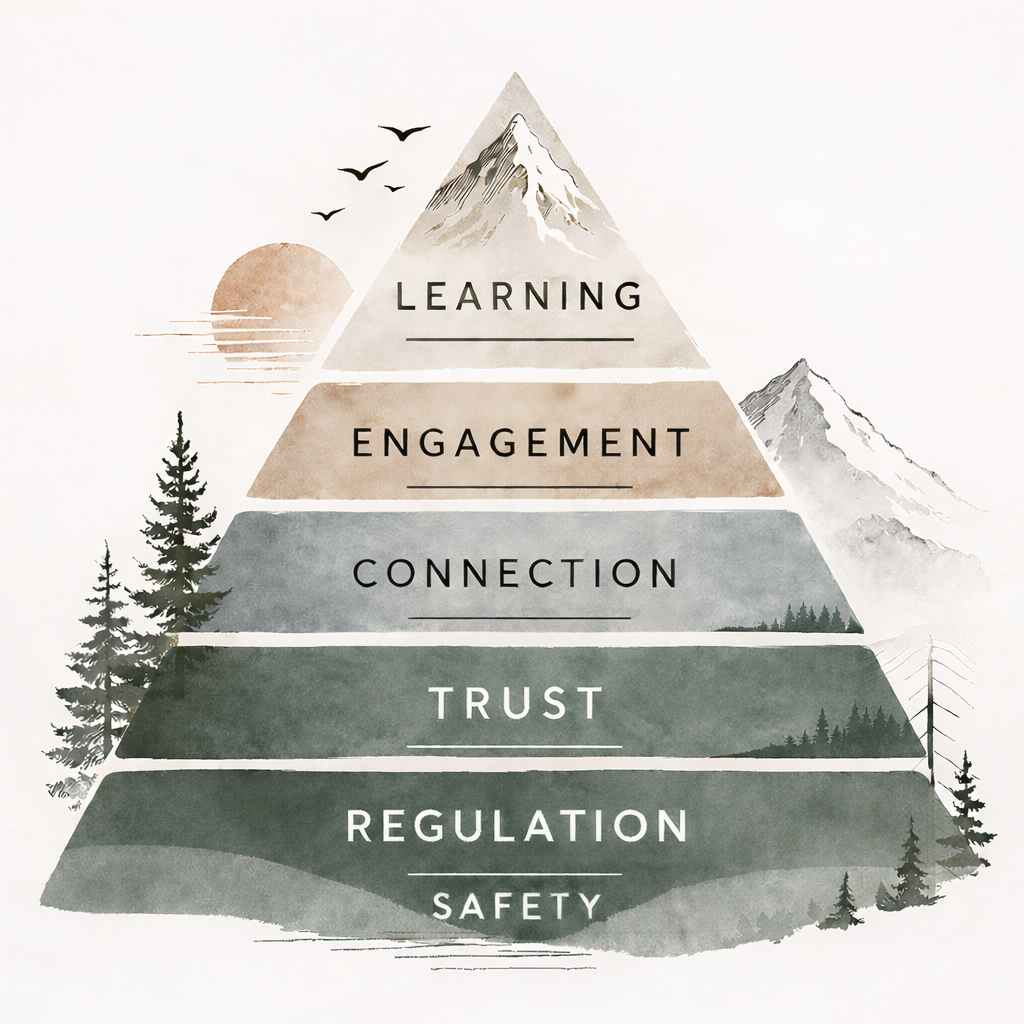
For these learners, learning environments often follow a slightly different progression and physical and emotional safety must be established before regulation can begin to occur:
Regulation Learning begins with nervous system stability. When the nervous system is calm and regulated, the brain can access cognitive systems responsible for attention, reasoning, and executive function.
Trust Trauma-impacted learners may require time to develop trust in adults before relational connection can be experienced as safe. Low-pressure presence, predictable routines, and consistent boundaries often support this process.
Connection Once trust begins to develop, supportive relationships can help stabilize the nervous system and reduce stress responses. Connection does look different in children with developmental trauma and often looks more like co-regulation and side-by side presence or synchronous behavior on behalf of the adult.
Engagement and Learning After regulation and relational safety increase, cognitive systems become more accessible, allowing the learner to gradually re-engage with simplified steps and academic tasks.
Understanding this difference is essential when supporting children with histories of trauma, disrupted placements, foster care, or adoption.
Learners Supported by the Adaptive Pedagogy Framework™
Our model is designed to support a wide range of learners whose nervous systems may experience increased cognitive or emotional load in traditional learning environments.
These learners may include children with:
• ADHD • autism spectrum differences • executive function challenges • learning disabilities • sensory processing differences • developmental delays • trauma histories • reactive attachment disorder • complex trauma • adoption or foster care histories • disrupted placements • anxiety or stress-related learning challenges • and more
All learners are capable, curious, and intelligent, yet many struggle when academic environments place high demands on attention, working memory, or emotional regulation.
Our framework helps educators and families design learning environments that support both neurological regulation and academic engagement.
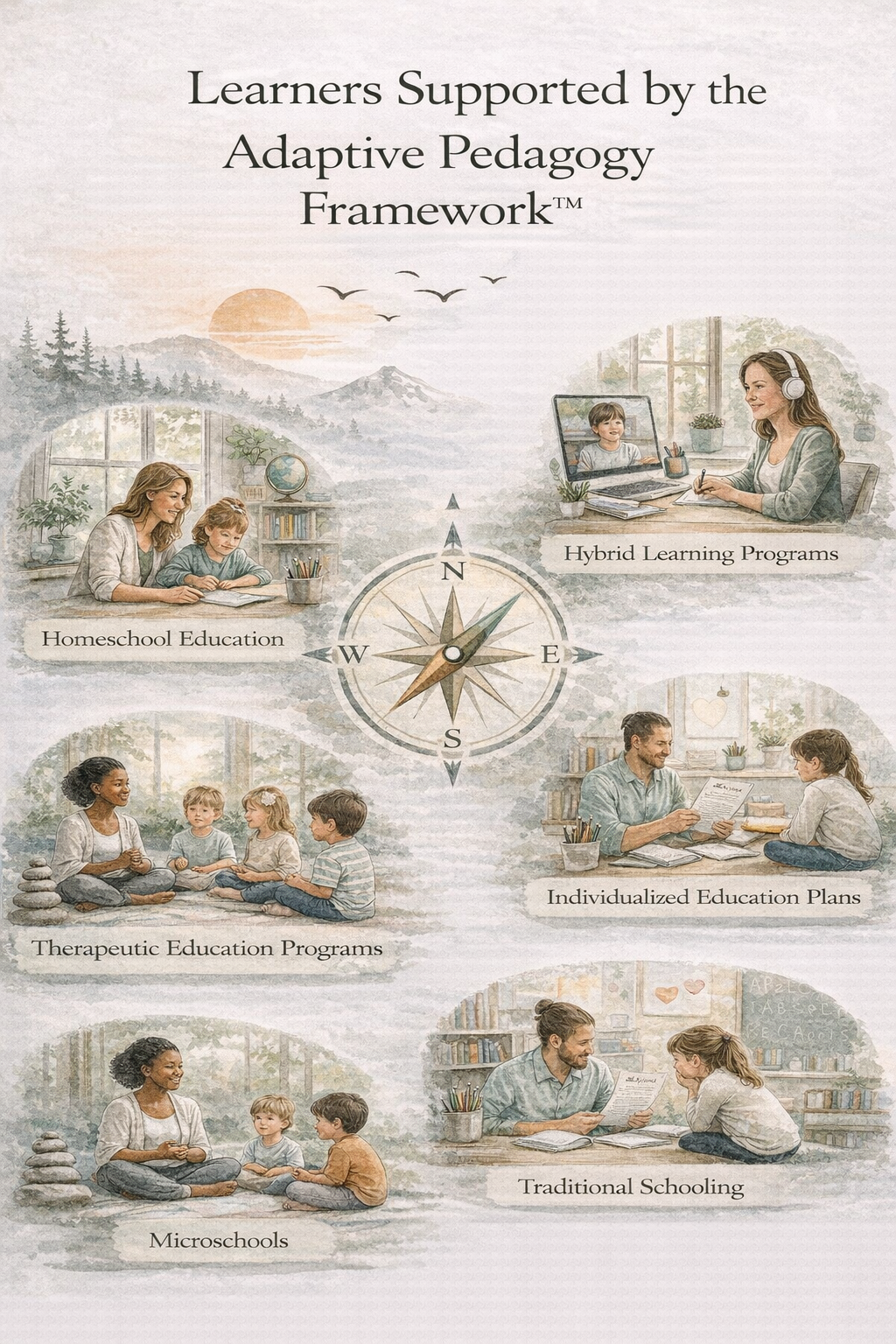
Where the Framework Can Be Applied
The Adaptive Pedagogy Framework™ can be implemented across a variety of educational environments.
The model is particularly effective in settings that allow flexibility, individualized pacing, and supportive relationships.
Because the framework focuses on neurological learning readiness, it can be adapted across many educational contexts while maintaining the core principle that regulation supports learning.
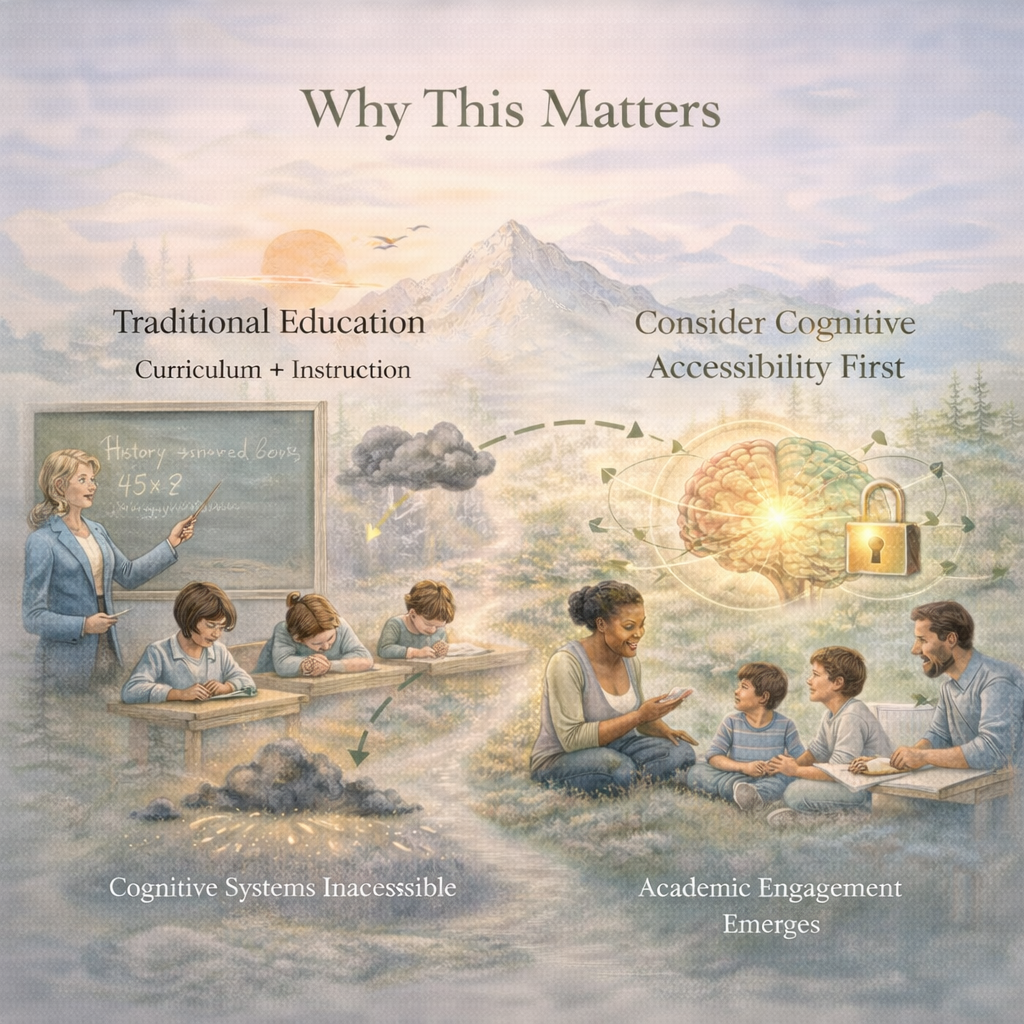
Traditional education assumes that learning begins with curriculum, instruction, and academic expectations.
However, neuroscience shows that the brain must first be able to access systems responsible for attention, working memory, reasoning, and emotional regulation.
When the nervous system is overwhelmed, these systems become inaccessible — even for highly capable learners.
The Adaptive Pedagogy Framework™ organizes learning environments around restoring cognitive accessibility first, allowing academic engagement to emerge naturally.
This shift transforms how educators and families understand learning challenges.
The Adaptive Pedagogy Framework™ and Regulation-First Learning Framework™ were developed by Adaptive Learning Academy.
These models describe observable learning patterns within neurodivergent and trauma-impacted educational environments and are used to guide the development of Adaptive Learning Academy resources, curriculum supports, and planning systems.
F.A.Q.
Answers to common questions about our adaptive frameworks and models
Yes. While the framework is especially effective in flexible learning environments such as homeschool programs, microschools, and hybrid models, many of its principles can be applied in traditional classrooms. Teachers can incorporate regulation supports, reduce unnecessary cognitive load, and prioritize relational safety to help learners access academic systems more consistently.
No. The Adaptive Pedagogy Framework is not a curriculum. It is a learning model that explains how the brain accesses learning systems. Curriculum and academic instruction can still be used within the framework, but they are introduced after the learner’s nervous system is able to support attention, memory, and reasoning.
Traditional education often assumes that learning begins with instruction, assignments, and academic expectations. The Adaptive Pedagogy Framework recognizes that learning is neurological first. It prioritizes regulation, relational safety, and cognitive accessibility so the brain can effectively engage with academic material.
Learners who may benefit often show patterns such as strong curiosity or understanding in conversation but difficulty completing academic work. They may become overwhelmed by assignments, struggle to start tasks, or shut down when demands increase. These patterns can indicate that the nervous system is having difficulty maintaining access to cognitive learning systems.
No. The goal of the framework is not to lower expectations, but to create the conditions that allow learners to meet them. When the nervous system is supported and cognitive systems are accessible, many learners are able to engage more fully and demonstrate their true academic potential.
Understanding Learning Challenges
Help Shape Future Learning Resources
We are continually developing resources to support neurodivergent and trauma-impacted learners. If you’re willing, we would love to better understand the learning challenges families and educators are experiencing. Your responses help guide future tools, resources, and research from Adaptive Learning Academy.